12 Mistakes Homeowners Make When Removing Trees, and How to Avoid Them
p12 Mistakes Homeowners Make When Removing Trees, and How to Avoid Them
Removing a tree looks straightforward until something goes wrong, a limb swings into a roof, the trunk barber chairs, or a hidden utility line gets hit. The fastest way to stay safe and protect your property is to treat tree removal as a controlled, planned job, not a weekend project. Below are the most common mistakes homeowners make, and what to do instead.
1) Underestimating risk and skipping a professional assessment
Many homeowners assume small to medium trees are safe to drop with basic tools. The danger often comes from lean, decay, split trunks, overhead targets, and unpredictable limb weight. To avoid this, have an arborist evaluate structure, lean, decay, and drop zone options. If the tree is near buildings, fences, sheds, or power lines, professional removal is usually the safest and cheapest outcome compared to repairs.
2) Ignoring permits, HOA rules, and protected tree regulations
Some areas require permits for removal, especially for street trees, certain species, or trees over a specific diameter. Avoid fines and delays by calling your city or county, and checking HOA requirements before scheduling work.
3) Failing to locate utilities before digging or cutting
Even if you are not excavating, stump grinding and root cutting can strike buried lines for gas, electric, water, septic, internet, or irrigation. Always call your local utility locating service before stump work, and identify private lines such as irrigation and landscape lighting.
4) Attempting removal near energized power lines
Working near power lines is one of the deadliest mistakes. Branches can conduct electricity even without direct contact. The safe approach is to keep tools, ladders, and people well away from lines and contact the utility company or a qualified tree service trained for line clearance.
5) Using the wrong tools, or poorly maintained tools
A dull chain, incorrect chain type, or malfunctioning brake increases kickback risk and causes erratic cuts. Use the correct saw size for the trunk, keep the chain sharp and properly tensioned, confirm the chain brake works, and never use a saw one handed.
6) Skipping proper personal protective equipment
Gloves alone are not enough. At minimum, use eye and ear protection, chainsaw chaps, sturdy boots with good traction, and a helmet when there is overhead hazard. PPE does not replace skill, but it reduces the severity of common injuries.
7) No plan for fall direction, drop zone, and escape routes
A safe removal starts with a plan. Homeowners often cut first and think later. Before any cuts, establish a clear drop zone, remove trip hazards, and identify two escape paths at roughly 45 degree angles away from the expected fall line. Keep bystanders and pets well outside the work area.
8) Incorrect notch and back cut technique
Improper cuts can cause the tree to twist, split, or fall unpredictably. Common errors include cutting the hinge away, making the back cut too low, or mismatching notch angles. If you are not trained in felling cuts, do not experiment near structures. When targets are nearby, a sectional removal using ropes and rigging is often the right method.
9) Misjudging lean, weight distribution, and wind effects
Trees rarely balance evenly. A slight lean can control the fall, and wind can shift the top at the worst moment. Avoid removal on windy days, and do not assume the tree will fall where you want just because you notched it. If the tree is back leaning or weighted over a target, professional rigging or mechanical assistance is usually required.
10) Climbing with ladders, or cutting above shoulder height
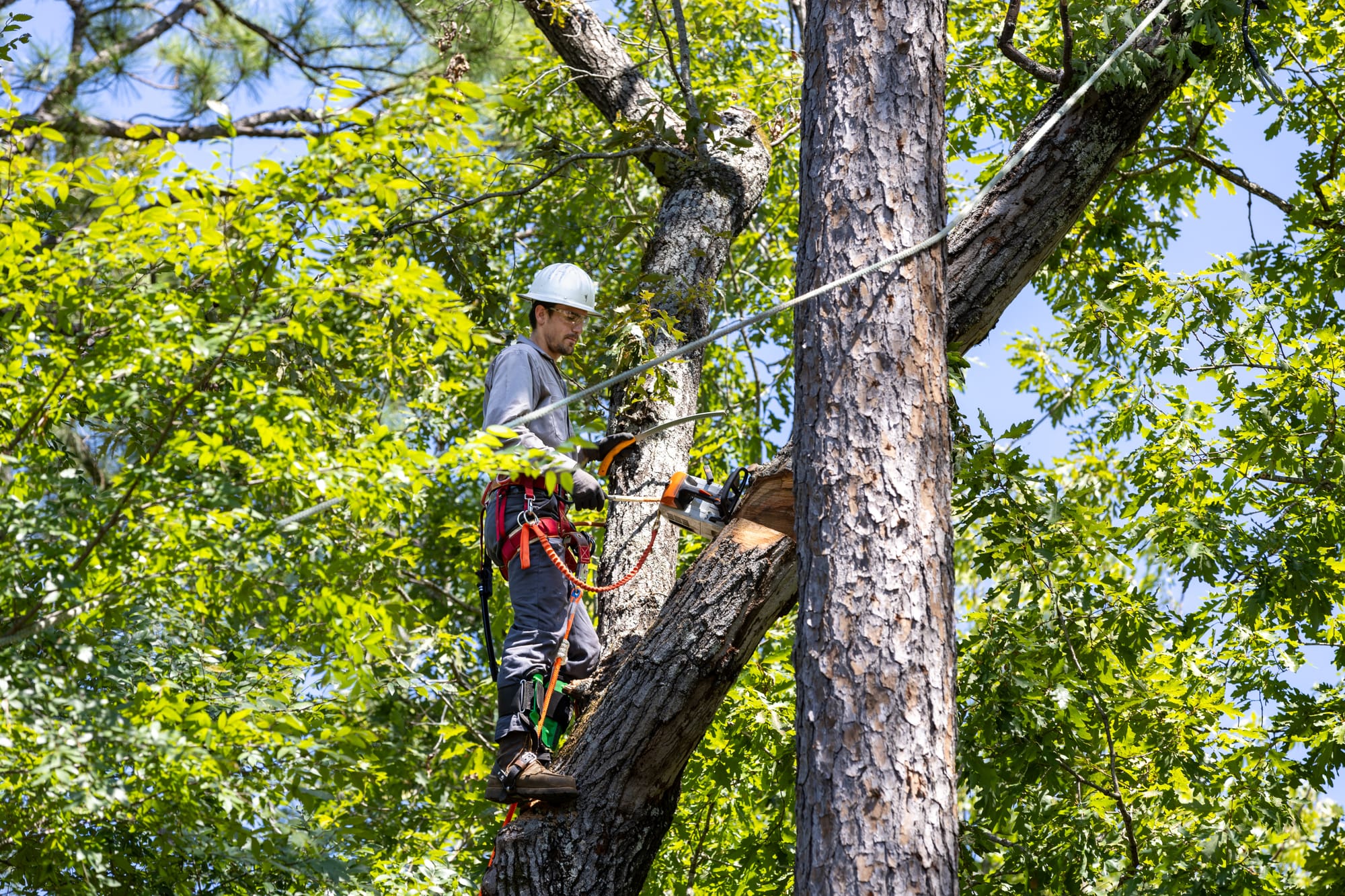
Ladders and chainsaws are a dangerous combination, especially on uneven ground. Cutting above shoulder height reduces control and increases kickback risk. If limbs must be removed overhead, the safer choice is to hire trained climbers with proper rope systems, or use an appropriate lift when conditions allow.
11) Poor rigging choices, or no rigging at all
Homeowners often try to tie a rope to a limb and control it by hand. Without proper anchor points, friction management, and rated equipment, the load can shock the rope, rip out a limb, or pull a person off balance. If limbs must be lowered over roofs, fences, or landscaping, use a qualified tree service with appropriate rigging gear and training.
12) Neglecting cleanup, stump plans, and post removal hazards
Even after the tree is down, hazards remain, spring poles in brush piles, unstable logs, and trip hazards from hidden limbs. Plan for debris removal, log handling, and stump grinding. If you will replant, consider soil condition and species selection, and avoid planting directly over utility corridors.
Quick ways to avoid these mistakes
- Get an on site evaluation when the tree is large, leaning, dead, storm damaged, or close to structures or wires.
- Confirm permits and rules before work begins.
- Call for utility locates before stump grinding or root cutting.
- Set a clear drop zone, keep people out, and establish escape routes.
- Use correct PPE and maintain tools, or hire a crew that does.
- Choose sectional removal and rigging when there is no safe felling zone.
When to call Eagle Lake Tree Service
If your tree is near your home, garage, driveway, fences, or any overhead lines, or if it shows signs of decay such as cavities, fungi, or heavy deadwood, it is a strong candidate for professional removal. A trained arborist and tree surgeon can select the safest method, felling when appropriate or dismantling in controlled sections, and can also handle stump options and site cleanup.
Tree removal is one of the highest risk jobs on residential property. Avoiding these 12 mistakes is not just about protecting your yard, it is about preventing injuries and costly damage. If you are unsure at any step, it is safer to stop and get expert help.